“But he rejected the advice which the elders had given him, and consulted the young men who had grown up with him, who stood before him. And he said to them, “What advice do you give? How should we answer this people who have spoken to me, saying, ‘Lighten the yoke which your father put on us’?” Then the young men who had grown up with him spoke to him, saying, “Thus you should speak to this people who have spoken to you, saying, ‘Your father made our yoke heavy, but you make it lighter on us’—thus you shall say to them: ‘My little finger shall be thicker than my father’s waist! And now, whereas my father put a heavy yoke on you, I will add to your yoke; my father chastised you with whips, but I will chastise you with scourges!’ ”” I Kings 12:8-11 NKJV
a. But he rejected the advice which the elders had given him, and consulted the young men: Before Rehoboam ever consulted with the younger men, he rejected the advice of the elders.
i. This is a common phenomenon today - what some call advice shopping. The idea is that you keep asking different people for advice until you find someone who will tell you what you want to hear. This is an unwise and ungodly way to get counsel. It is better to have a few trusted counselors you will listen to even when they tell you what you don’t want to hear.
b. And consulted the young men who had grown up with him: These men were much more likely to tell Rehoboam what he already thought. By turning to those likely to think just as he did, it shows that Rehoboam only asked for advice for the sake of appearances
i. Their unwise advice shows the wisdom of seeking counsel from those outside our immediate situation and context. Sometimes an outsider can see things more clearly than those who share our same experiences.
c. And now, whereas my father put a heavy yoke on you, I will add to your yoke: The younger men offered the opposite advice to the elders. They suggested an adversarial approach, one that would make Rehoboam more feared than Solomon was.
i. Solomon asked a lot of Israel, in both taxes and service. Yet we don’t have the impression that Israel followed Solomon out of fear, but out of a sense of shared vision and purpose. They believed in what Solomon wanted to do, and were willing to sacrifice to accomplish it. Rehoboam did not appeal to any sense of shared vision and purpose – he simply wanted the people to follow his orders out of the fear of a tyrant.
ii. “With a dozen rash words, Rehoboam, the bungling dictator, opened the door for four hundred years of strife, weakness, and, eventually, the destruction of the entire nation.” (Dilday)
(Guzik)
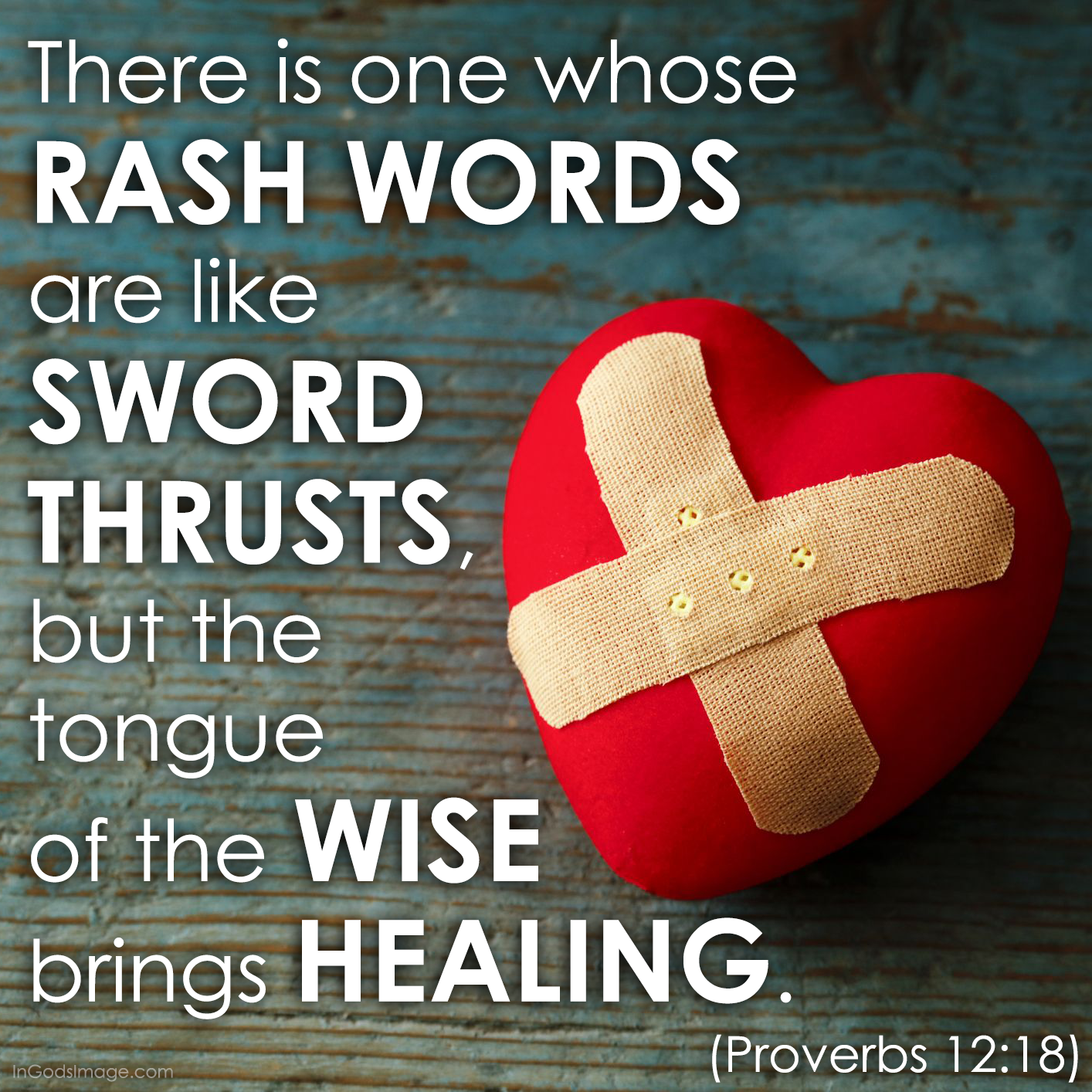
Rash Words!
The Bible has a lot to say about rash words!
“There is one who speaks like the piercings of a sword, But the tongue of the wise promotes health.” Proverbs 12:18 NKJV
“Because they rebelled against His Spirit, So that he spoke rashly with his lips.” Psalms 106:33 NKJV
“For then it would be heavier than the sand of the sea— Therefore my words have been rash.” Job 6:3 NKJV
“Do not be rash with your mouth, And let not your heart utter anything hastily before God. For God is in heaven, and you on earth; Therefore let your words be few.” Ecclesiastes 5:2 NKJV
Rehoboam would have been better off to heed the elders advice instead of the young immature friends! All he had to do was to take his father’s advice from
Ecclesiastes, “Do not be rash with your mouth”!
Have you ever been rash with your mouth? I’m guilty!
Blessings

No comments:
Post a Comment